
What a Good LED Driver IC Distributor Actually Looks Like in 2026
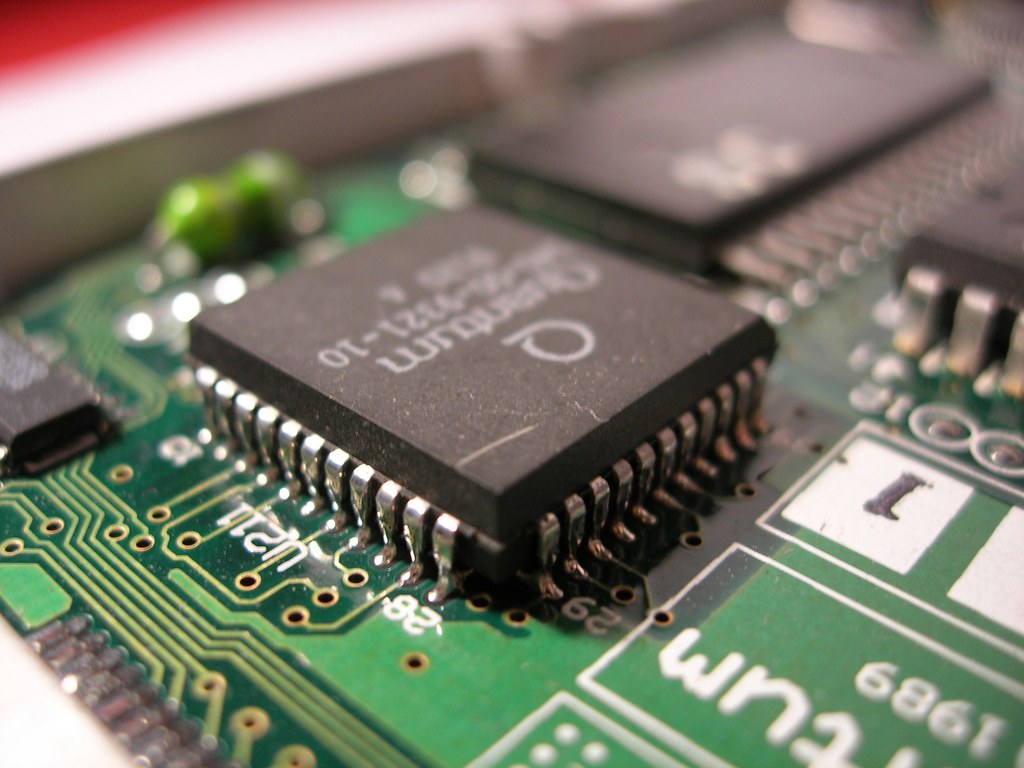
If you've been buying lighting and backlight parts for a while, you already know the uncomfortable truth: picking an LED driver IC distributor matters almost as much as picking the driver itself. The IC might be perfect on paper, but if it shows up in week 14 instead of week 6, or arrives in a suspect reel with re-marked tops, your production line doesn't care how good the datasheet was.
This guide is written from the sourcing side of the table. It covers what actually goes wrong with LED driver IC procurement, what to check before you place a PO, and how the current market is changing the way buyers should think about this category.
Why LED driver ICs are trickier to source than they look
On the surface, LED drivers seem like commodity parts. Constant current, some PWM dimming, maybe a boost stage. How hard can it be?
Pretty hard, it turns out. The category splits into at least four distinct families, and distributors who treat them as interchangeable cause real pain:
- Low-side linear sink drivers for signage and architectural lighting (think 16-channel parts in the TLC5940 / SM16716 class)
- Buck, boost, and buck-boost switching drivers for high-power COB and street lighting, often 60V to 150V input
- Backlight drivers for displays, with multi-string current matching requirements down to 1-2%
- Matrix and pixel drivers for automotive and Mini-LED backlighting, increasingly with integrated diagnostics and SPI/I2C control
A distributor who stocks deep in one family and shallow in the others will quote you a 26-week lead time the moment your design moves from a simple signage driver to an automotive matrix part. Ask for stock depth by family, not just by brand.
The automotive shift is squeezing supply
Here's the bigger trend buyers need to watch. Automotive lighting and display content keeps climbing, and the silicon around it is following. Mini-LED backlighting alone has pushed demand for high-channel-count, AEC-Q100 qualified drivers well beyond what the supply chain planned for three years ago.
The surrounding power components are moving the same direction. Electronics Weekly reported this month that Taiwan Semiconductor expanded its TQM series with AEC-Q qualified 60V dual N-channel MOSFETs, drop-in compatible with common packages. That kind of release tells you where design activity is concentrated: automotive-grade, 60V-class power stages, the exact complement to the LED drivers going into headlamps, DRLs, and interior ambient systems.
What does that mean for you? If your project touches automotive, expect longer allocation cycles on Q-qualified drivers, and treat commercial-grade substitutes as a false economy. Qualification respins cost more than the price delta, every time.
Specs buyers actually get wrong
Most sourcing mistakes on LED drivers come from a handful of datasheet lines that look fine until the boards come back. A quick reference:
| Parameter | Typical Range | What Goes Wrong |
|---|---|---|
| Input voltage (boost drivers) | 4.5V - 65V | Automotive load dump needs margin; a 40V abs-max part dies on a 24V truck bus |
| Channel current accuracy | ±1% to ±5% | String-to-string mismatch shows up as visible brightness bands on panels |
| PWM dimming frequency | 100Hz - 20kHz+ | Too low and cameras catch flicker; too high and EMI fails at the edges |
| Package | SOT-23-6 to HTSSOP-28, QFN | QFN thermal pads need the board layout done right or junction temp runs away |
| Operating temp | -40°C to +125°C (auto), -40°C to +85°C (comm.) | Outdoor signage in summer will cook a commercial-grade part |
| Qualification | AEC-Q100 or none | Mixing grades across a BOM causes customer audit failures later |
Two of these deserve extra attention. First, thermal. A recent Semiconductor Engineering piece on scaling thermal analysis made the point that rising power density is forcing thermal work earlier in the design cycle. That applies to a 3A boost LED driver in a tiny QFN just as much as to a data center chip. If your distributor can't tell you the part's thermal resistance and typical derating behavior, they probably haven't handled returns on it either.
Second, dimming interface compatibility. Analog dimming, PWM, I2C, and SPI-controlled matrix parts are not interchangeable even within the same vendor's catalog. Cross-referencing without checking the dimming topology is how you end up with 5,000 pieces of the wrong reel.
Counterfeit and refurbished risk is real in this category
LED drivers don't get the press that fake FPGAs or memory do, but they get counterfeited plenty, especially the high-volume lighting parts from TI, Infineon, onsemi, Diodes Inc., and Monolithic Power. The pattern is consistent: a popular part goes on allocation, spot prices spike, and reels of re-marked or pulled parts appear within weeks.
Practical checks that catch most of it:
- Ask for date codes and lot codes up front, and refuse mixed lots unless you're doing independent test
- For gray-market buys, budget for X-ray and decap on a sample before committing to full quantity
- Check that the top marking font and laser etch match known-good parts from the same date code era
- Be suspicious of pricing that's 30%+ below franchised cost on an allocated part
At XingHuan International, we run incoming inspection on non-franchised lots for exactly this reason, and we'd rather walk away from a deal than ship a part we can't trace. Any distributor worth your business should be able to describe their inspection process in specifics, not adjectives.
Lead times, MOQs, and the obsolescence trap
Lighting product lifecycles are long. A street light fixture design can ship for a decade. The driver IC inside it might not.
Older linear sink drivers and some legacy boost controllers are hitting last-time-buy notices, and the replacement parts are rarely pin-compatible. If your design depends on a part that's been in production for 8+ years, get a lifecycle statement now, not when the fab announces end of life. And when you do see an LTB notice, buy to your real consumption plus a modest buffer. Panic overbuys tie up cash and, ironically, feed the counterfeit market when excess stock gets dumped later.
On MOQs: many LED drivers come in 2,500 or 3,000-piece reels, and franchised channels won't break them. A good independent distributor will sell you cut tape at a fair markup for prototype and pilot runs. If a supplier insists on full reels for a 50-piece evaluation order, they're telling you something about their flexibility.
A realistic scenario
Say you're building 40,000 units of an outdoor display panel. Your design uses a 16-channel constant-current sink driver and a separate boost for the string supply. The sink driver is on 16-week lead through franchise, but your build starts in 10.
The wrong move: buying the first spot-market lot you find at a suspiciously good price. The right move: split the risk. Buy a verified lot from an independent distributor with traceable supply chain paperwork for the first two production runs, keep the franchised order in place for the back half of the program, and qualify a second-source driver in parallel if the pinout allows it. It costs more in engineering time up front. It costs far less than a line-down situation in week 12.
What to ask before you commit
A short checklist that separates real partners from quote factories:
- Can you provide lot traceability and country of origin documentation?
- What's your return and replacement policy if parts fail incoming inspection on my side?
- Do you stock the automotive grade, or will you silently substitute the commercial grade?
- What are your actual lead times on my five highest-volume line items, not the catalog number?
- Can you support last-time-buy quantities with proper storage (MSL handling, dry pack)?
The answers matter less than how they're answered. Vague responses on traceability are a red flag regardless of how competitive the pricing looks.
FAQ
Q: How do I know if an LED driver IC quote is too cheap to be genuine?
A: Compare against franchised pricing and current spot-market benchmarks for that exact part number and date code range. If a part is on allocation and someone offers it at 30-40% below franchise cost with immediate stock, assume elevated counterfeit risk until independent inspection proves otherwise.
Q: Can I substitute a commercial-grade LED driver for an AEC-Q100 part to save cost?
A: Not for anything going into a vehicle or a customer audit trail, no. The silicon is sometimes the same die, but the qualification, testing, and documentation are not. Expect the substitution to surface during PPAP or a customer quality audit, usually at the worst possible time.
Q: What lead time should I plan for on LED driver ICs in late 2026?
A: Common commercial lighting drivers run 8-16 weeks through franchised channels, while automotive-qualified and high-channel-count matrix parts can stretch to 20-26 weeks under allocation. Independent distributors with physical stock can often fill gaps in 1-2 weeks, but verify lot traceability before you rely on that path for volume.