
How to Vet an Operational Amplifier
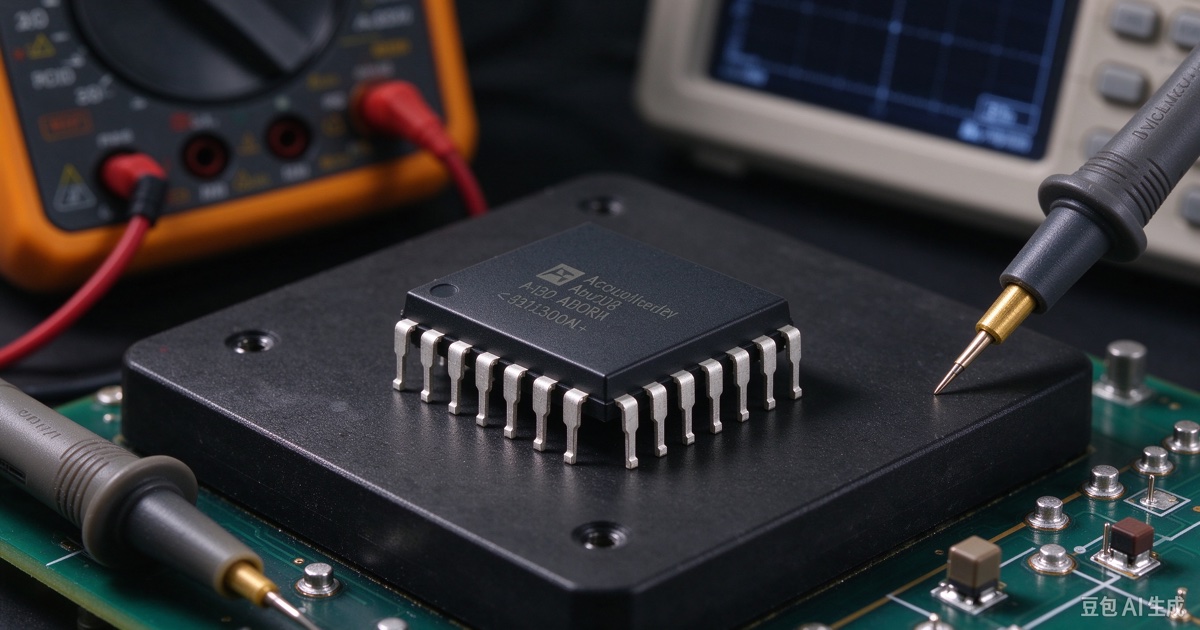
An operational amplifier supplier is a company that stocks and sells op amps from manufacturers like Texas Instruments, Analog Devices, STMicroelectronics, onsemi, and Renesas, either as a franchised distributor, an independent distributor, or a hybrid of both. Choosing one matters more than most buyers expect, because op amps are among the most counterfeited and most frequently substituted analog parts in the supply chain. The global op amp market sits in the range of USD 5 to 6 billion and grows modestly year over year, but the parts themselves keep getting more specialized, which makes sourcing mistakes more expensive.
This article is a field guide for buyers and engineers who need to qualify an op amp source, written from the supply side. It covers what to check on the part, what to check on the supplier, and where deals go wrong.
Start with the op amp, not the supplier
Most sourcing problems with op amps begin before any supplier is contacted. The root cause is usually a loose specification. "We need an op amp, something like an LM358" is not a spec. The LM358 alone has been made by half a dozen companies over four decades, in multiple revisions, with meaningfully different input offset voltage, input bias current, and output swing behavior.
Before you send an RFQ, pin down the parameters that actually matter for the circuit. The table below shows three common op amp classes and the numbers buyers typically get wrong.
| Class | Example part | Key spec to lock | Typical value | Common pitfall |
|---|---|---|---|---|
| General purpose | LM358DR (TI) | Input offset voltage, supply range | Vos ±3 mV max, 3–32 V | Mixing LM358A and LM358B revisions with tighter Vos |
| Precision | OPA2188 (TI) | Vos drift, noise | Vos 25 µV max, 0.03 µV/°C drift | Accepting "equivalent" with 10x worse drift |
| High speed | AD8065 (ADI) | GBW, slew rate, supply current | 145 MHz GBW, 180 V/µs slew | Substituting a part that oscillates at the same gain |
| Low power | MCP6V31 (Microchip) | Quiescent current, Vos | Iq ~24 µA, Vos 8 µV | Ignoring startup behavior in battery gear |
| Rail-to-rail I/O | TLV9062 (TI) | Output swing to rail, capacitive load drive | 10 mV from rail at 10 kΩ | Assuming "rail-to-rail" means it drives to 0 V under load |
Once the spec is fixed, write it into the RFQ. A good operational amplifier supplier will read it and come back with exact part numbers, date codes, and packaging (reel vs. tube, moisture sensitivity level). A weak one will quote "LM358, best price" and leave you to discover the rest.
Franchised, independent, or both
The franchised route (Arrow, Avnet, DigiKey, Mouser, and the regional players) gives you traceability by default. Parts come straight from the manufacturer's line, with full lot paperwork. For production volumes and anything going into medical, automotive, or aerospace builds, this is the default answer and it should be.
The independent route exists because the franchised channel has gaps. Allocations happen. Parts go end-of-life with 12 weeks of notice and your product has five years left in it. Niche analog parts from older fabs, the kind of 8-pin SOIC op amps that have been in production since the 1990s, get quietly deprioritized when capacity gets tight. When that happens, an independent distributor with real inspection capability is not a compromise; it is the only option that keeps the line running.
The catch is that the independent channel is also where the counterfeits live. Op amps are cheap, high-volume, and easy to re-mark. A fake OPA277 costs pennies to produce and can pass a casual visual check. This is why the inspection question matters so much, and it deserves its own section.
What to actually check when vetting an operational amplifier supplier
Price is the last thing on this list for a reason. Buyers who lead with price end up qualifying suppliers on the one axis that correlates with trouble.
- Lot traceability: Can they show the chain of custody back to the manufacturer or a franchised source? For franchised parts this is trivial. For independent stock, ask for the original packing slip or C of C from the prior holder. If the answer is a shrug, walk away.
- Date code policy: Analog parts age reasonably well, but you should still know what you are buying. Ask for date codes up front, not after the PO. Anything older than five years deserves a conversation about solderability and MSL handling.
- Inspection capability: At minimum, a serious independent distributor runs visual inspection under magnification, X-ray for die and wire bond verification on suspect lots, and XRF for lead finish composition. Some also do decapsulation and electrical testing on a sample basis. Ask what they do in-house versus outsource.
- Test reports on request: For a precision op amp, ask whether they can provide actual measured data on the lot: offset voltage distribution, input bias current at temperature. Most cannot, but the ones who can are worth keeping on the approved vendor list.
- MOQ and packaging: Confirm whether stock is factory-sealed reels, cut tape, or loose tubes. Loose parts in a bag with a handwritten label is a red flag for anything beyond a bench prototype.
- Realistic lead times: As of late 2026, standard op amps from the big analog makers run 8 to 20 weeks from franchised channels, with some precision and high-voltage parts stretching longer. If an independent supplier promises 3 days on a part the franchise quotes at 26 weeks, ask why.
One more check that costs nothing: search the part number plus "counterfeit" or "ERAI" before you commit. ERAI membership and a willingness to share their own screening records are good signs.
The market context buyers should know in 2026
Analog is not the part of the chip industry making headlines, but the pressure from AI data centers is reaching it anyway. Power delivery is the obvious example. EE News Europe recently covered the Microchip and Navitas 800 V reference design for AI racks, and the same buildout is pulling on high-voltage sensing and signal-conditioning parts, including the op amps and comparators used in current monitoring and protection loops. When a hyperscaler program ramps, the analog content around the power stage gets sucked up with it, and lead times on seemingly boring parts move out.
On the manufacturing side, the major analog vendors have spent the past two years consolidating older fabs and moving volume to newer 300 mm lines. That transition is generally good for cost and capacity, but it produces a steady stream of last-time-buy notices on legacy op amps built on older processes. If your BOM includes a part older than your junior engineers, check its lifecycle status quarterly, not once a year. A recent EDN piece on ATE continuity testing is a useful reminder that even basic analog devices go through serious test flows, which is exactly why cloned parts that skip proper test are such a problem in the gray market.
The practical takeaway: keep an approved second source for every op amp on a production BOM, and requalify alternates before you need them, not after the primary goes on allocation.
A realistic scenario
Here is a pattern that plays out regularly. A mid-size industrial controls maker needs 5,000 pieces of a precision dual op amp, say an OPA2188IDGKR, for a transmitter design. Franchised stock is zero, lead time quoted at 18 weeks, and the line is due to build in ten. The buyer goes to the independent market and gets three quotes in a day, spread across a 3x price range.
The lowest quote comes with no paperwork and a blurry photo of a reel. The middle quote offers date codes, photos, and a C of C, but cannot explain where the stock originated. The highest quote is from a distributor that provides the original franchised packing list from an OEM excess sale, plus X-ray images of samples from the lot. In this situation the highest quote is usually the cheapest option, because a single field failure on a precision analog front end costs more than the entire price difference. Buyers who have been burned once tend to skip straight to the third quote.
At XingHuan International we handle this kind of requirement by quoting only stock we can trace, and by sending inspection photos and date codes with the quote rather than after the buyer asks twice. That practice is worth demanding from any operational amplifier supplier you work with, including us.
Where substitutions quietly fail
Substitution is the other common failure mode, and it often comes from the buyer's own side under schedule pressure. An op amp with the same gain-bandwidth and supply range is not automatically a drop-in. Watch these specifically:
- Phase margin and capacitive load: two parts with identical GBW can behave very differently driving 100 pF of cable capacitance. One rings, one does not.
- Input common-mode range: rail-to-rail input parts still have crossover distortion regions. A part that is "better on paper" can measure worse in a single-supply buffer.
- Input bias current vs. source impedance: swapping a JFET-input part for a bipolar one in a high-impedance sensor front end changes the error budget by orders of magnitude.
- EMIRR: electromagnetic interference rejection varies hugely between parts and is rarely on the front page of the datasheet. In products near radios or switch-mode power stages, it shows up as a mysterious DC offset.
Any substitution on a production design should go through the engineer who owns the schematic, with the actual datasheet in hand, before the PO is cut. The five minutes saved skipping that step is how a "cost-down" turns into a recall.
FAQ
Q: How do I verify that op amps from an independent distributor are genuine?
A: Ask for lot traceability back to a franchised source or OEM excess sale, plus inspection evidence: high-magnification marking photos, X-ray of the die and bond wires, and XRF of the lead finish. For precision parts, request sample electrical data (offset voltage, bias current) measured against the datasheet limits.
Q: What lead times should I expect for op amps in late 2026?
A: Standard general-purpose op amps from franchised channels typically run 8 to 16 weeks. Precision, high-voltage, and automotive-grade parts often stretch to 20 to 30 weeks, especially where AI data center and industrial programs are pulling on the same capacity. Genuine independent stock can fill gaps in days, but verify it properly.
Q: Can I safely substitute a pin-compatible op amp from another manufacturer?
A: Sometimes, but never on pinout alone. Compare offset voltage, drift, input bias current, phase margin with your actual load, and EMIRR, then have the design engineer sign off. Parts that match on the headline specs still differ in behavior at the margins, and the margins are where analog circuits live.