
Sourcing Electronic Components for IoT: A Buyer's Field Guide
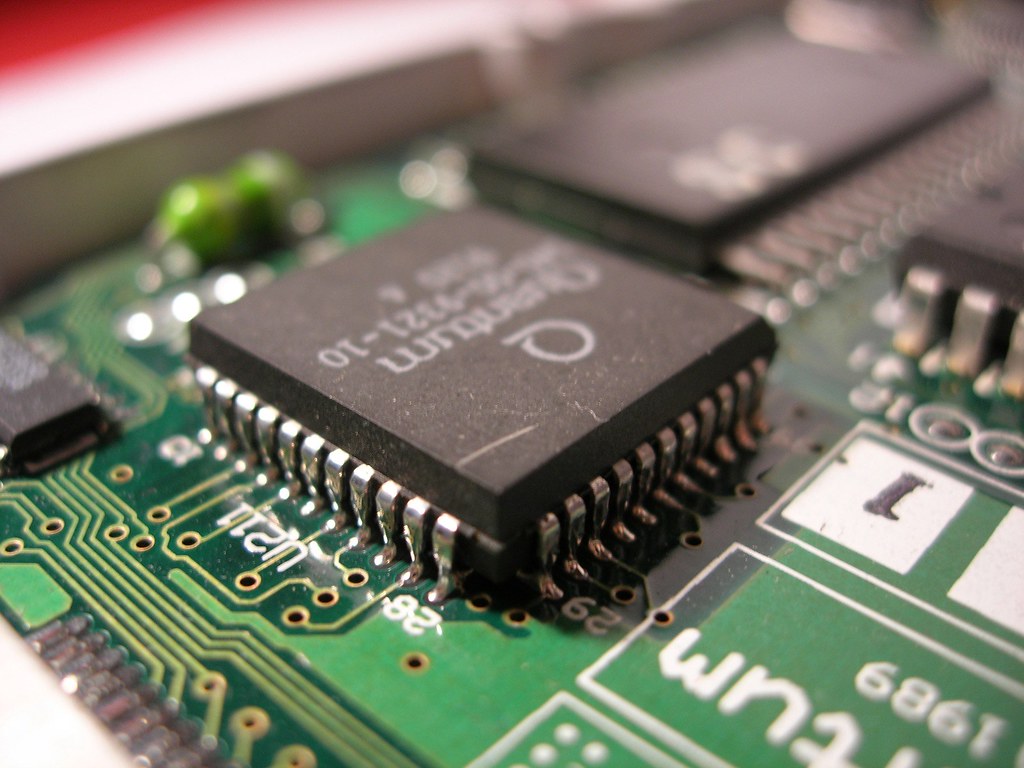
Designing an IoT product is one thing. Actually getting the electronic components for IoT builds, at volume, on schedule, and at a price that doesn't kill your margins, is a different discipline entirely. After years of watching projects stall over a single sensor or a 40-week MCU lead time, I can tell you the BOM is where most IoT programs live or die. This guide walks through the component categories that matter, what to check before you commit, and the sourcing traps that catch even experienced teams.
The Core Component Categories in an IoT BOM
Almost every IoT device, whether it's a soil sensor or a factory gateway, boils down to five blocks: compute, connectivity, sensing, power management, and memory. Get the mix wrong on any one of them and you'll feel it in battery life, cost, or certifiability.
Compute is usually an ultra-low-power MCU or a small SoC. Connectivity is your radio: BLE, Wi-Fi, LoRaWAN, NB-IoT, or LTE-M. Sensing depends on the application. Power management covers regulators, battery chargers, and increasingly dedicated energy-management ICs. Memory is often overlooked until firmware bloats past the internal flash.
Low Power Is Still the First Filter
Battery life claims on datasheets are optimistic. When I evaluate electronic components for IoT endpoints, I look at sleep current first, then wake-up latency, then active-mode draw under real radio load. A part that sleeps at 200 nA but takes 50 ms to wake and rejoin a network can burn more energy per day than a hungrier part that wakes fast.
The industry keeps pushing this boundary. As Power Electronics News recently reported, Nanopower's new nPZ2100 IC manages sensors and peripherals autonomously so the main MCU stays asleep longer, cutting wake-ups in battery-powered edge devices. Parts like this change the sourcing math: an extra dollar on a power-management companion chip can let you drop to a cheaper, smaller MCU and shrink the battery. Worth modeling before you lock the BOM.
Choosing the Radio: It Dictates Everything Else
Your connectivity choice drives antenna design, certification costs, power budget, and which modules are even available. A recent EE News Europe piece on LPWAN selection makes the point well: the question isn't which technology is "best," it's which one survives your deployment environment for years on a small battery. LoRaWAN suits private networks with sparse, low-data sensors. NB-IoT and LTE-M ride carrier infrastructure but add SIM, certification, and recurring costs. BLE and Wi-Fi win when a phone or gateway is nearby.
From a sourcing standpoint, pre-certified modules (think u-blox, Murata, Quectel, or Laird-class parts) cost more per unit than a discrete chipset plus antenna, but they pull months out of your regulatory timeline. For volumes under ~50k units a year, modules usually win on total cost. Past that, run the numbers on a discrete design.
Reference Specs: A Realistic Endpoint BOM
Here's the kind of comparison I put together when scoping a battery-powered sensor node. Values are typical datasheet figures; always verify against the latest revision.
| Function | Example Part | Key Spec | Package | Temp Range |
|---|---|---|---|---|
| MCU | STM32L452RE | 80 MHz Cortex-M4, ~84 µA/MHz, 420 nA standby | LQFP-64 | -40 to +85 °C |
| Sub-GHz radio | Semtech SX1262 | LoRa, 4.2 mA RX, +22 dBm TX | QFN-24 | -40 to +85 °C |
| BLE module | u-blox NINA-B406 (nRF52840) | BLE 5.1, pre-certified, +8 dBm | 10 × 14 mm SiP | -40 to +85 °C |
| Env. sensor | Bosch BME688 | Temp/RH/pressure/gas, 2.1 µA @ 1 Hz | LGA-8 | -40 to +85 °C |
| Buck-boost | TPS63900 | 1.8–5.5 V in, 75 nA IQ | WCSP-12 | -40 to +125 °C |
| Storage | Winbond W25Q128JV | 128 Mbit SPI NOR, 4 µA standby | SOIC-8 | -40 to +85 °C |
None of these are exotic. That's the point. Reliable IoT products are built on boring, available parts with long lifecycles.
Memory and Storage: Don't Under-Spec It
Firmware grows. OTA update schemes need room for two images plus a fallback. If you're logging data at the edge, wear and retention matter too. Embedded storage vendors are leaning hard into this demand; EE Times covered BIWIN's embedded and industrial storage push at embedded world NA 2026, aimed squarely at edge devices. For buyers, the takeaway is that industrial-grade eMMC and SPI NOR with -40 °C ratings and longevity commitments now exist at multiple vendors, so single-sourcing memory is a choice, not a necessity. Qualify a second source early.
Sourcing Pitfalls That Actually Bite
- Lead time whiplash. MCUs and radios that were 50+ weeks out in 2022 swung to oversupply, and some lines are tightening again. Check current lead times per line item, not per vendor, and don't assume last quarter's numbers still hold.
- Counterfeit and remarked parts. IoT BOMs are full of small passives and legacy ICs that brokers love to substitute. If a price looks 30% below distribution, there's a reason. Ask for traceability and, on grey-market buys, date-code and X-ray or decapsulation evidence on high-risk lines.
- Refurbished modules sold as new. Pulled wireless modules with worn flash are a real problem in the broker channel. Buy modules from franchised channels or vetted independents with test capability.
- MOQ and reel politics. A sensor with a 3k-piece MOQ is fine at production, painful at prototype. Plan prototype buys separately and negotiate cut-tape or sample programs.
- EOL surprises. Cellular modules especially. 2G/3G sunsets already orphaned a generation of trackers. Confirm the vendor's longevity roadmap and PCN policy before design-in.
- Certification drift. A module that's "certified" may only be certified in specific antenna configurations. Changing the antenna can void the modular approval. Read the integration notes.
Working With a Distributor
For production volumes, franchised distribution gives you traceability and allocation priority. For hard-to-find, EOL, or allocated parts, a vetted independent distributor fills the gap. At XingHuan International (icxing.com), we handle both sides of that equation: sourcing current-production lines and hunting down obsolete or constrained parts with documented quality checks. The practical advice is the same regardless of who you use: split your BOM by risk. Buy the commodity passives wherever they're cheapest, but route the MCU, radio, and power ICs through channels you can audit.
FAQ
Q: Should I use a pre-certified wireless module or design with a discrete chipset?
A: Below roughly 50k units per year, modules almost always win on total cost once you factor in RF engineering, antenna tuning, and certification fees, which can run $30k–$100k for a discrete cellular or sub-GHz design. Past that volume, a discrete design can save $1–$3 per unit, but only if you have RF capability in-house.
Q: How do I protect against counterfeit components in my IoT BOM?
A: Buy MCUs, radios, and power ICs through franchised distribution with full traceability. If you must use the independent market, require date codes, original packaging photos, and third-party inspection (X-ray plus electrical test) on anything over a few thousand dollars; reputable independents like XingHuan International build this into their standard process.
Q: What's a realistic lead time to plan around for IoT components in 2026?
A: Commodity passives and SPI NOR flash are running 6–12 weeks, mainstream MCUs 12–26 weeks depending on family, and cellular modules 16–30 weeks for some SKUs. Build a 16-week buffer on any single-sourced part and re-quote lead times every quarter rather than assuming stability.
The teams that ship IoT products on time aren't the ones with the cleverest designs. They're the ones who treated the BOM as a living document, qualified second sources before they needed them, and refused to lock in parts with 40-week lead times and no alternates. Do that, and the rest of the build gets a lot easier.