
ESD Protection Components: Clamp Choices Buyers Miss
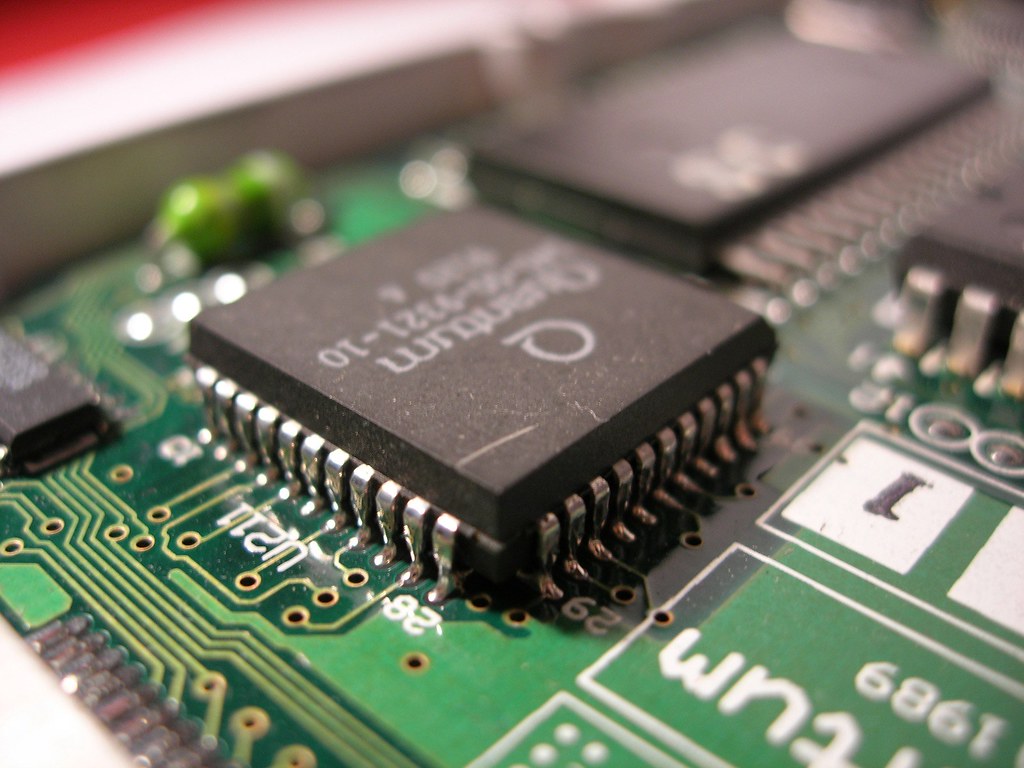
ESD protection components look simple until a port fails in the field and the failure photo shows a tiny burned crater next to the connector. By then the argument about a few cents per diode is over. Buyers usually get pulled into the same trap: the BOM says “ESD diode,” the schematic symbol is generic, and the sourcing team is asked to find anything with a 5 V standoff that fits the pad. That is how a design passes bench tests, then struggles after a winter of dry office air, a USB cable that gets yanked, or a contract manufacturer that changes its handling process.
The real job is not “add protection.” It is to keep the surge away from silicon without ruining the signal, and to buy parts that remain available when the product ramps. A recent Semiconductor Engineering week in review was full of advanced packaging, custom silicon and high-bandwidth interfaces. That matters here because faster interfaces leave less room for sloppy capacitance, and denser boards put connector discharge paths closer to expensive ICs. Protection is becoming a layout and supply-chain decision, not an afterthought near the edge of the PCB.
ESD protection components: start with the threat, not the catalog
Most engineers begin with IEC 61000-4-2. Good instinct. But the number in a headline, often ±8 kV contact and ±15 kV air, is only the test gun’s side of the story. Your product sees the result through enclosure seams, cable shields, floating metal, ESD gun approach speed and the exact ground route back to the chassis. A phone port, a factory sensor and an EV service connector do not fail the same way.
Ask a blunt question early: where does the current go? If the answer is “through the HDMI retimer and then hopefully to ground,” the diode choice will not save you. Put the clamp close to the entry point, give it a short low-inductance path to chassis or a solid ground pour, and keep protected traces off the unprotected side of the board. I have seen otherwise good designs fail because a neat diagonal trace carried the strike across an isolation gap to a neat diagonal death.
For vehicle and industrial designs, the surrounding power electronics are getting harsher. EE News Europe’s note on Infineon’s OPTIREG PMIC for EV traction inverters is a reminder that high-voltage systems now mix resolver signals, gate drivers, safety monitors and communications in noisy spaces. External ESD still matters, but so do coupled transients from switching, hot plug events and long harnesses. Don’t assume a tiny low-cap diode rated for consumer USB belongs near a 24 V sensor input.
The four numbers that decide whether a clamp works
Datasheets make ESD parts look interchangeable. They are not. When you compare candidates, pin these values down before price enters the chat.
| Parameter | What to check | Concrete examples buyers use |
|---|---|---|
| IEC 61000-4-2 rating | Contact and air discharge at the port, with the final enclosure and cable | Consumer ports often target ±8 kV contact, ±15 kV air; exposed industrial panels may need system testing beyond the diode rating |
| Working voltage VRWM | Must sit above normal line tolerance, leakage included | 3.3 V GPIO often uses 3.3 to 5 V parts; 5 V USB VBUS needs margin; 24 V inputs need a very different clamp class |
| Clamping voltage VC | Compare at the test current that matters, not only at 1 A | SMAJ5.0A is around 9.2 V clamp at tens of amps; low-cap data-line arrays may clamp far higher under fast ESD current |
| Capacitance | Line-to-ground and line-to-line, at bias, across frequency | USB 2.0 can tolerate tens of pF on some lines; USB 3.x, HDMI 2.1 and SerDes links often want sub-pF parts and tight routing symmetry |
| Package and inductance | Pad geometry, stub length, ground via count, assembly availability | DFN1006 and SOD-523 save space; DO-214AC SMA handles energy better; tiny parts can lose to a bad via |
Clamping voltage is where buyers get fooled. A part with a pretty ±30 kV IEC stamp can still let 30 or 40 V reach a 1.8 V PHY for a few nanoseconds if the package inductance is high and the pulse is fast. Read the TLP curve if the vendor publishes one. If they do not, ask why. For a sourcing engineer, missing TLP data is not automatically a deal breaker, but it changes the risk conversation with design.
Capacitance cuts the other way. Too much capacitance can round edges, break eye diagrams and create a debug cycle that eats the savings from a cheaper diode. A 0.5 pF part near the connector may cost more than a 5 pF part, yet still be cheaper than a failed compliance run. The expensive component is the one that makes your high-speed team schedule another respin.
A realistic scenario: the “same footprint” substitution
Picture a control board with RS-485, CAN and a service USB port. Production is stable until a TVS diode goes on allocation. Purchasing finds an equivalent from a second source: same SOT-23-6 look, same 5 V working voltage in the headline, same bold IEC rating. Samples pass a quick gun test in the lab. Three months later, returns come in from sites with long cable runs and cabinet doors that open during storms.
The root cause is boring. The substitute had different capacitance line-to-line, a slightly higher dynamic resistance, and a pinout that matched the footprint but not the same current loop because the ground pin sat farther from the chassis via field. Nobody forged documents. Nobody bought obvious scrap. The failure came from treating “fits” as “equals.”
That is why alternates need a small qualification ritual: compare VRWM, VC at 8/20 µs and at ESD-like current, capacitance at bias, leakage over temperature, package drawing and recommended land pattern. Then run the actual port through IEC contact discharge with the final cable. If the team only checks the gun in open air on a bare board, the test is theater.
Sourcing pitfalls that show up after design freeze
Lead times for common TVS families can look calm until a connector standard, a handset launch or a car program pulls the same low-capacitance arrays everyone wants. Multi-source the function, not only the exact part. Keep at least one consumer-grade option and one industrial or automotive option when the product could migrate markets. If the design needs AEC-Q101, say it in the RFQ. Don’t let a broker discover that requirement after quoting commercial stock.
Counterfeit risk in ESD parts is less dramatic than fake MCUs, but it exists, especially in small packages where marking is faint and margin is thin. The bigger gray market problem is older stock with unknown storage, reels that were opened, or parts reeled from cut tape without moisture and handling history. The Hackaday security roundup talked about supply-chain worms returning on the software side; hardware has its own version of the same lesson. If you cannot trust the path, the part number printed on the reel is just ink.
Ask for date codes, original labels, moisture barrier bag state for MSL-sensitive packages, and traceability to an authorized lot where the application justifies it. For cheap passives some buyers accept open-market risk. For a medical port, an EV service tool, or a safety-rated industrial node, that acceptance needs to be written down and owned by someone.
MOQ is another quiet trap. A perfect DFN1006 array may ship only in 10k reels while your pilot run needs 800 boards. A distributor can cut tape, but ask how they control ESD during handling and whether the remaining reel stays sealed. Ironic, yes: buying anti-ESD parts from a sloppy handler is a real thing.
How to write the RFQ so suppliers cannot hide
Send a short, sharp RFQ. Include interface type, normal voltage, fault voltage if any, connector and cable length, IEC target, max capacitance budget, PCB stackup or ground scheme, package limits, temperature range, compliance needs, annual volume and target dock date. Add the layout snippet around the port if NDA allows. Good suppliers will ask one or two questions back. Bad ones answer everything with “yes.”
When XingHuan International supports this kind of RFQ at icxing.com, the useful work is usually not the first quote. It is flagging that a low-cap part is single-sourced in a package your CM cannot inspect well, or that an automotive equivalent has a longer lead time but cleaner traceability. That kind of tradeoff is where a distributor earns its margin.
Keep a small approval folder with the tested waveform, board photo, diode location, cable used and pass/fail criterion. When a substitute appears during a shortage, you can decide in hours instead of reopening the whole argument. The folder also stops the classic blame loop where design says purchasing changed the part and purchasing says design approved the footprint.
What is changing in 2026 buying
The parts are getting smaller and the systems are getting less forgiving. More products expose USB-C, Ethernet, camera links and antennas in the same compact shell. More factories mix cloud-managed firmware updates with old serial ports that still need service in the field. A buyer cannot fix signal integrity, but can refuse vague specs and push for evidence before a shortage forces a bad swap.
The practical mindset is simple. Treat ESD protection components as insurance with known exclusions. Know the test level, know the route to ground, know the speed penalty, and know whether the reel in front of you has a clean past. If any of those answers is fuzzy, the low quote is not low.
FAQ
Q: Is ±15 kV air and ±8 kV contact enough for every external port?
A: No. That rating describes the component under a standard waveform, not your finished product. Enclosure gaps, cable shields and ground via placement can move the stress, so run system-level IEC 61000-4-2 with final hardware before freezing the BOM.
Q: Can I substitute a same-package TVS during a shortage?
A: Only after matching VRWM, clamping voltage at relevant current, capacitance at bias, leakage and pinout, then repeating the port-level ESD test. A same SOT-23 or DFN footprint can still change loop inductance enough to fail.
Q: What should I demand from a distributor for low-risk ESD parts?
A: Ask for traceable lot or date-code information, original labels, storage and MSL handling state, and clear disclosure for cut tape or opened reels. For automotive or medical use, require AEC-Q101 status and authorized-channel evidence when the program justifies it.