
Pasqal €50M Q-PLANET Project: Component Buyer Notes
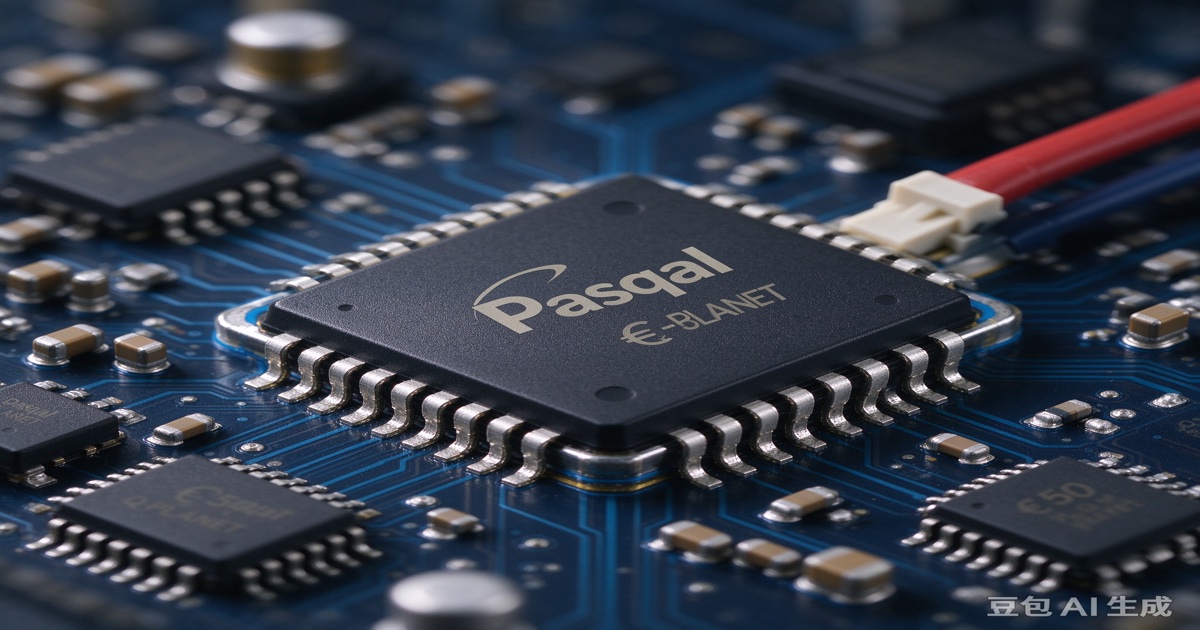
Pasqal, the French neutral-atom quantum computing company, is leading a €50 million European initiative called Q-PLANET to build industrial-grade chip components for neutral-atom quantum technologies, with 28 partners across the supply chain. The EE News Europe report frames it as a pilot line, meaning the goal is repeatable manufacturing processes rather than one-off lab assemblies. For component buyers and distributors, the keyword "NEWS: Pasqal leads €50 million EU neutral-atom quantum chip project [EE News Europe]" matters less as a headline and more as a demand signal: a whole category of photonics and control electronics is about to move from lab-bench purchasing to volume procurement.
Put simply, neutral-atom quantum computing traps individual atoms in laser-generated optical tweezers and manipulates them with precisely tuned light. The qubits are atoms; the supporting hardware is photonics. A pilot line like Q-PLANET exists to take the lasers, modulators, drivers, and control electronics that currently get hand-selected by PhD students and turn them into qualified, lot-traceable, datasheet-backed parts. That transition changes who buys, how they buy, and what paperwork they demand.
Why the Q-PLANET pilot line matters to the supply chain
Quantum hardware scaling was one of the threads in Semiconductor Engineering's recent chip industry week in review, sitting alongside $10T data center projections and 800V power racks. That placement is telling. Quantum is no longer a pure research budget line; it's being discussed in the same breath as infrastructure spending. When a €50M pilot line commits to industrial-grade output, somebody has to supply the BOM, and that BOM is not exotic. It's tunable lasers, acousto-optic and electro-optic modulators, high-speed DAC/ADC boards, low-phase-noise RF synthesizers, vacuum-rated feedthroughs, and precision current drivers.
The money flowing into this space is real. Semiconductor Engineering's Q3 2026 startup funding roundup counted 80 startups raising $8.5B in a single quarter, with data movement and memory companies taking large shares. Quantum and photonics ventures are riding the same capital wave, and funded startups buy components fast, in awkward quantities, with little patience for 26-week lead times.
What neutral-atom machines actually pull from the BOM
Buyers who haven't touched quantum accounts often assume the parts list is all cryogenics and superconductors. Neutral-atom systems are different: they run at ultra-high vacuum but mostly near room temperature for the electronics. The critical path is optics. A single system can use dozens of frequency-stabilized laser lines, each needing its own modulation and power control chain.
| Component class | Typical spec buyers ask about | Common packages / formats | Sourcing pain point |
|---|---|---|---|
| Narrow-linewidth laser (780 nm, 795 nm, 1064 nm) | Linewidth <100 kHz, mW-to-W output | Butterfly 14-pin, benchtop OEM module | Long lead times, limited qualified vendors |
| Acousto-optic modulator (AOM) | Center freq 80–350 MHz, rise time <50 ns | Free-space module, SMA drive | Custom center frequencies, small MOQs |
| Electro-optic modulator (EOM) | Vπ 3–6 V, DC–10 GHz | Fiber-coupled, LiNbO₃ | Counterfeit risk on grey-market fiber parts |
| High-speed DAC/ADC board | 1–5 GSa/s, 14–16 bit | PCIe, PXIe, custom FPGA carrier | Allocation on data-converter ICs |
| Low-noise RF synthesizer | Phase noise <-120 dBc/Hz @10 kHz | SMA module, eval boards | PLL/VCO IC supply constraints |
The pattern is familiar to anyone who sourced for photonics or instrumentation OEMs: moderate volumes, tight specs, few vendors, and a market where the official channel and the grey channel look deceptively similar.
The data movement angle buyers shouldn't ignore
Quantum controllers are, at heart, real-time data movement problems. Thousands of optical channels need synchronized, low-latency control waveforms. That is why the EE Times BitCast on solving the data movement challenge in multi-die systems is more relevant to this story than it first appears. Extending NoC connectivity across die boundaries is how classical control silicon scales, and quantum control SoCs are heading down the same multi-die road. Buyers supporting quantum control board builds should expect the same pressures as AI accelerator programs: advanced-node FPGAs and data converters on allocation, with brokers quoting suspicious stock.
There is a useful historical echo here. Electronics Weekly just revisited its 1998 yarn about National Semiconductor's CEO promising a single-chip PC, cutting chip count from 12 to one. Integration never killed the component business; it changed which parts lived on the BOM. Quantum pilot lines will do the same. Some discrete optics will migrate into photonic ICs, and the buyers who track which functions get integrated first will quote smarter.
Practical sourcing implications
First, treat quantum and photonics accounts like medical or aerospace, not like consumer. Lot traceability and original paperwork are non-negotiable because a drifting laser diode or a remarked EOM can waste weeks of system calibration. When XingHuan International (icxing.com) supports photonics-adjacent BOMs, the recurring request is consistency: same lot code where possible, full date-code history, and honest answers on factory-sealed versus open-market stock.
Second, watch the data converter and RF synthesizer ICs inside those control boards. These parts are already tight because AI and defense programs consume the same silicon. A €50M pilot line will not move global allocation, but dozens of similar programs worldwide will. Distributors who flag alternative pin-compatible parts early save their customers a board respin.
Third, expect small MOQs with big expectations. A pilot-line customer might order 200 AOM driver boards today and 5,000 in two years, or zero if the architecture changes. Quote honestly on NRE and lead time instead of promising volume pricing that depends on a forecast nobody can defend.
FAQ
Q: Should distributors stock neutral-atom quantum components now, or wait?
A: Stock the cross-over parts, not the exotic ones. High-speed DACs, low-noise RF synthesizers, and fiber-coupled modulators sell into test, defense, and LiDAR too, so the inventory risk is low. Application-specific items like custom-frequency AOMs should stay build-to-order.
Q: What is the biggest counterfeit risk in photonics BOMs?
A: Fiber-coupled modulators and laser diodes pulled from decommissioned telecom gear are the usual suspects; they get cleaned up and sold as new. Always ask for original CofC and serialization, and test insertion loss and Vπ on first article before accepting a lot.
Q: How will Q-PLANET affect lead times for standard photonics parts?
A: A €50M, 28-partner program is meaningful but not market-moving on its own; the risk is cumulative demand from many funded quantum programs hitting the same narrow vendor base. Expect 20–40 week quotes on narrow-linewidth lasers and plan safety stock accordingly.