
EWNA 2026: Embedded AI Moves to BOM Reality
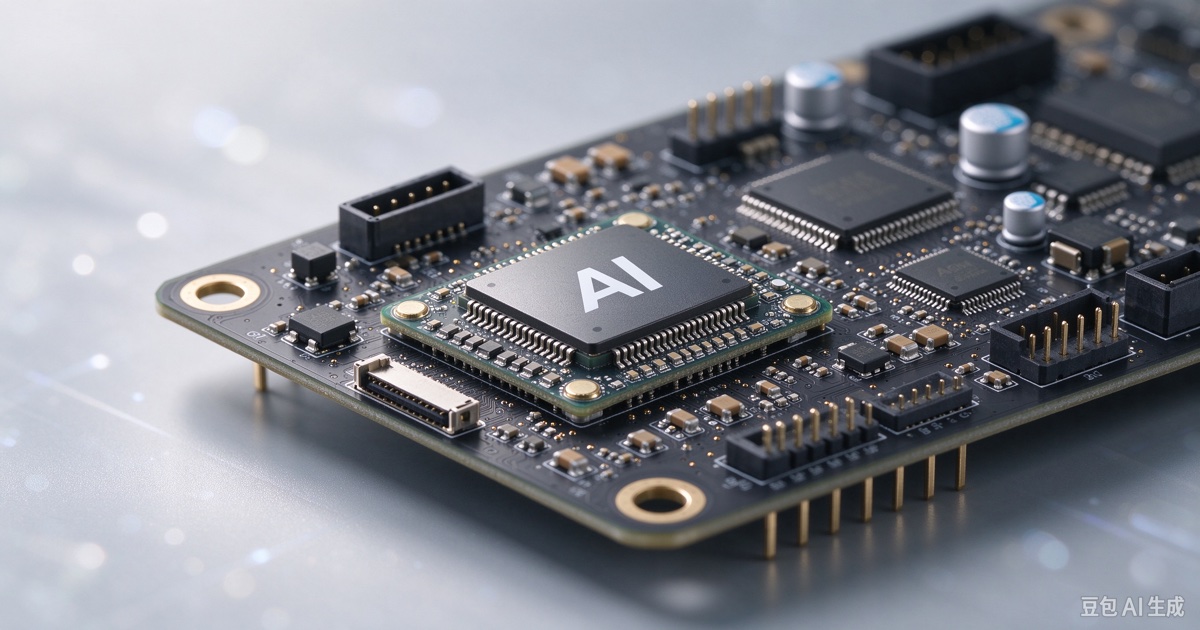
Embedded AI at EWNA 2026 means inference moving from a cloud checkbox into ordinary embedded hardware: MCUs with NPUs, small FPGAs doing sensor fusion, and boards that must survive heat, noise and long service life. EE News Europe’s report from Anaheim says embedded AI took centre stage at EWNA 2026, with demos spanning FPGA edge processing, RF characterisation, embedded data collection and post-quantum security. For buyers, the useful signal is not the buzzword. It is that AI features are becoming standard line items in BOMs, with the same old problems: allocation, lifecycle, firmware lock-in and proof that parts are original.
What changed at the show
The strongest theme was edge inference sliding down into smaller devices. EE News Europe’s second-day coverage said edge AI is shifting onto MCUs, alongside the software needed to develop, update and maintain deployed models. That matters because a model is not a one-time purchase. If the part cannot take signed updates, log failures, roll back safely and keep enough headroom for the next model revision, the cheap silicon becomes expensive in year three.
The surrounding news gives the demand side some scale. AMD crossing a $1 trillion market cap after a 9.6% rise to $613 is a data-centre story, but it explains why CPU, GPU, memory and power capacity keep getting pulled toward AI demand. Even when your product is a motor controller or a gateway, those upstream priorities can tighten wafers, substrates, memory and OSAT slots. Embedded AI does not sit outside that pressure; it inherits it.
There was also a practical thread beyond inference chips. Advanced Energy’s DF150 is a rugged 160 W AC/DC unit aimed at defense, industrial, telecom, transportation and energy gear, which is a reminder that edge AI boxes still fail from heat, surges and bad rails before they fail from lack of TOPS. Cognex launching an AI-based wafer reader for fabs points the other way: traceability inside manufacturing is getting smarter too, which should help lot control if distributors pass the data through instead of flattening it into a generic CoC. And imec expanding TSMC cloud access means more small teams can design advanced parts, so expect more niche AI silicon and more short-lived variants, not fewer.
Why buyers should care
Embedded AI changes the BOM shape even when the end product looks familiar. A vision sensor that once used an MCU plus image sensor may now need an NPU-capable MCU, faster NOR flash for model storage, tighter LDO rails, more decoupling, better clock jitter and a connector rated for more mating cycles because field updates become routine. None of that is exotic. The trap is assuming last year’s approved vendor list still fits.
Counterfeit risk shifts too. When demand rises for AI-branded parts, brokers start relabelling ordinary MCUs, pulling older speed grades, or mixing date codes to fill shortages. I have seen plenty of shortage buys fail not on function but on paperwork: no lot traceability, a CoC that does not match reel labels, or a “new” reel with moisture-sensitive handling that makes no sense for the claimed date code. If a supplier cannot show lot code, packing history, MSL handling and original chain, the low quote is not a saving.
XingHuan International (icxing.com) sits in that practical middle: franchised lines where the project needs clean pedigree, independent sourcing when a part is constrained, and inspection discipline when the deal is too good. For embedded AI builds, that mix matters because the high-risk items are often boring: 32 Mbit NOR flash, low-jitter oscillators, 1.8 V regulators, MIPI connectors and industrial-temp passives around the star chip.
Parameters to pin down before you quote
The table below is the kind of screen I would run before letting an “edge AI ready” part into a production BOM. The numbers are not a wish list; they are the points where designs usually get hurt later.
| BOM block | Check before approval | Typical target or red flag | Sourcing note |
|---|---|---|---|
| AI MCU or NPU SoC | Int8 throughput, SRAM, model update path | 256 KB to 2 MB SRAM; signed OTA; rollback partition | Ask for lifecycle status, not just launch slides |
| Small FPGA for sensor pre-processing | LUT count, block RAM, I/O voltage, temp grade | 1.2 V core, 1.8/3.3 V I/O; -40 to +100 C junction | Watch cloned configuration flash and grey-market dev-kit pulls |
| External model storage | NOR flash size, erase cycles, read speed | 32 to 256 Mbit QSPI/Octal; 100 k cycles preferred | Allocation can move fast when MCU vendors bundle firmware |
| Power tree | Core rail ripple, transient load, sequencing | 0.8/1.1 V core, 1.8 V IO, 3.3 V peripheral; <3% ripple | Second-source PMICs early; package options vanish first |
| Clock and RF sensing | Jitter, frequency stability, sweep margins | XO/TCXO ppm budget matched to sensor fusion window | Do not swap ±50 ppm for ±10 ppm without retest |
| Environment | Ambient range, conformal coat, connector rating | -40 to +85 C industrial; +105 C for sealed enclosures | AI load raises self-heating; derate the box, not the datasheet |
Practical sourcing implications
Start with the model’s lifecycle, not the chip’s. Ask how long the toolchain, NPU library and security keys will be maintained. A part with strong benchmarks and a stale SDK is a maintenance bill. If the vendor roadmap says “long life” but cannot state a last-time-buy policy or PCN process in writing, treat it as consumer-grade until proven otherwise.
Then protect the boring parts. Many edge AI designs miss lead time because the team secures the SoC and forgets QSPI flash, low-profile inductors, MIPI CSI connectors or the exact crystal tolerance the reference design assumed. MOQs are another quiet issue: AI evaluation boards are easy to buy, but production reels of industrial-temp variants can carry higher minimums and longer NCNR windows. Get the exact ordering code, temperature suffix, tape-and-reel option and date-code range before release.
Build a second-source plan that is honest. Some NPU blocks are proprietary, so true pin-for-pin alternates may not exist. Your fallback may be a different partition: keep sensor pre-processing in an FPGA or DSP-friendly MCU so the main model can move vendors, or reserve board area for a larger package. It costs a little copper now and can save a respin later.
For refurbished or hard-to-find parts, be strict. Reflowed BGA AI modules, pulled PMICs and remarked flash can pass a basic boot test and fail under thermal load. Require X-ray for BGA, solderability checks where risk is high, MSL bake records, decapsulation on suspect lots and electrical test at temperature if the part is safety-relevant. If a seller resists lot traceability, walk away even when the line is down.
What I would do this quarter
Pick one current design and map every AI dependency: model format, compiler version, boot ROM, secure key storage, flash layout, clock tree and thermal limit. Then quote the full supporting set with lead times, not just the processor. Ask suppliers which SKUs are already seeing PCN or die revision chatter. The best EWNA takeaway is simple: embedded AI is now ordinary electronics, and ordinary electronics rewards buyers who check the unglamorous parts first.
FAQ
Q: Does EWNA 2026 mean I should redesign for an NPU now?
A: Not automatically. If your workload is anomaly detection, keyword spotting or simple vision under 1 TOPS, an NPU MCU can cut latency and power, but keep a fallback path if the vendor SDK or lifecycle is young.
Q: Which parts are most likely to go short in an edge AI BOM?
A: The processor gets attention, but QSPI NOR flash, industrial-temp PMICs, low-jitter oscillators, MIPI connectors and rugged power supplies often bite first. Quote exact temperature suffixes and reel options early; industrial variants can carry higher MOQs and longer NCNR terms.
Q: How do I lower counterfeit risk when AI parts are constrained?
A: Require lot traceability, matching CoC and reel labels, MSL handling records and original chain-of-custody. For BGA or pulled parts, add X-ray, solderability and temperature-load testing before the lot reaches production.