
NSING N32 MCUs: Full-Stack Chips for Industry and Energy
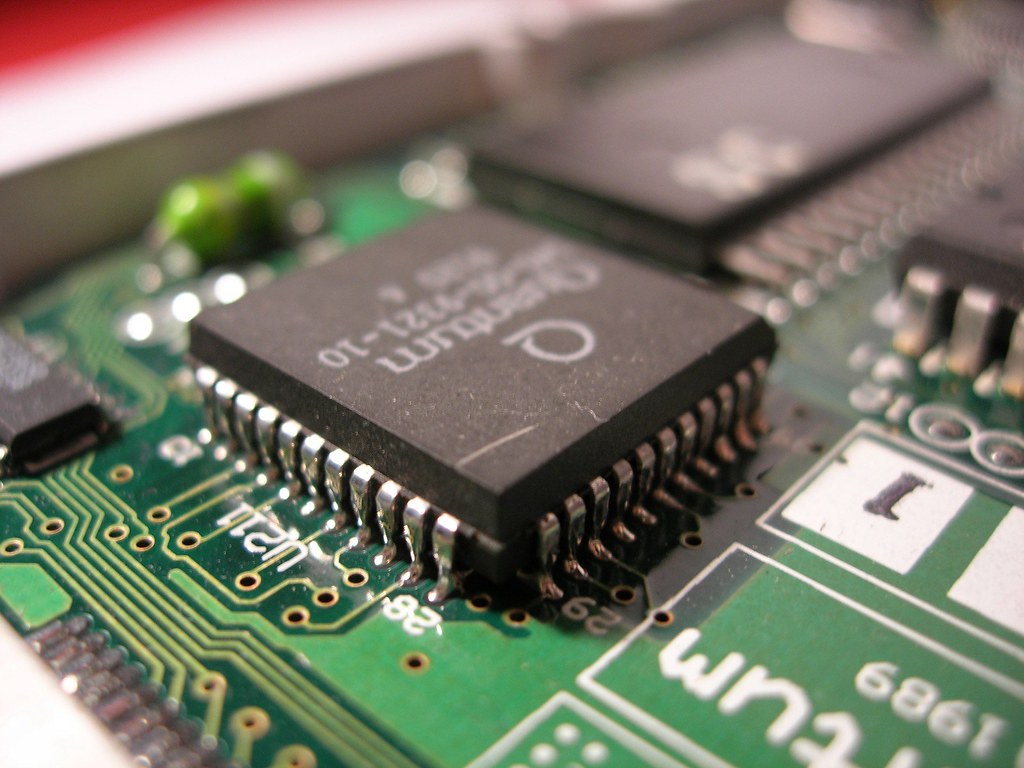
NSING Technologies, a Singapore-founded chip company, has laid out a full-stack semiconductor portfolio aimed at industrial automation, AI data centers, and digital energy — headlined by its N32-series MCUs running Arm Cortex-M4F and M7 cores at 144 to 600 MHz, with EtherCAT, CAN-FD, USB high-speed, and high-precision ADCs integrated on-chip, as EE Times reported. For buyers, this isn't just another MCU launch. A 600 MHz M7-class part with native EtherCAT changes the shortlist math for servo drives, inverters, and power conversion designs that used to default to the usual two or three Western vendors.
What NSING actually announced
The pitch is vertical coverage: one silicon family stretching from the motor-control node up through industrial gateways and into energy infrastructure. The N32 line spans a wide performance band — 144 MHz M4F parts for cost-sensitive control loops, up to 600 MHz M7 devices for drives that need real-time fieldbus stacks and fast ADC sampling in the same package. On-chip EtherCAT and CAN-FD matter because they pull protocol logic out of an external ASIC or FPGA and drop BOM count.
Full-stack here also means the company is pairing silicon with reference designs and software stacks for target applications like servo drives and inverters. That's the part buyers should pay attention to. A chip with a working EtherCAT slave stack and a tuned motor-control library is a different sourcing proposition than a bare die with a datasheet and a promise.
Why this lands now
Timing is not accidental. Industrial and energy OEMs have spent the last few years re-qualifying second sources after the allocation mess of 2021–2023, and price pressure on Western analog and MCU lines keeps pushing engineers to look wider. TI's October price adjustment is a fresh reminder — spot-market distributors were publicly offering tens of millions in ADI/TI inventory to buyers caught short. When a top-tier analog vendor moves prices, every qualified alternative on the AVL suddenly gets a second look.
There's a bigger structural shift behind it too. Huawei's Kirin 9050 Pro, built around what the company calls the Tau scaling law to sidestep EUV lithography limits, shows how much architectural creativity is going into working around leading-edge constraints, per EE Times. Industrial MCUs at mature nodes — 40 nm and above, typically — live in a different world, but the lesson carries over: vendors that optimize architecture and integration instead of chasing the smallest node can ship competitive parts at stable cost. That's exactly the lane NSING is driving in.
The connectivity angle buyers miss
Digital energy and smart-industry builds don't end at the motor drive. The same projects usually include a building-level or site-level wireless layer, and that's where spec sheets get optimistic. Wi-Fi HaLow is gaining traction for exactly these deployments because it trades bandwidth for range and sub-GHz wall penetration, a balance EE Times covered in an intelligent-buildings piece. If your energy-gateway design pairs an N32-class MCU with a HaLow radio, you've now got two relatively young silicon ecosystems on one board. Plan your validation time accordingly.
Practical sourcing implications
New-vendor MCUs in industrial designs come with a familiar checklist. Skip it and you'll learn the lessons the expensive way.
- Lifecycle commitment in writing. Industrial designs run 10–15 years. Get the longevity or PCN policy documented before design-in, not after. Ask directly what the EOL notification window is.
- Second-source reality check. A 600 MHz M7 with EtherCAT has no drop-in equivalent from ST, NXP, or Infineon. If single-source risk worries you, architect the firmware abstraction layer so a swap is painful but possible.
- Toolchain and stack licensing. Confirm whether the EtherCAT slave stack carries royalty obligations or membership requirements with the ETG. This surprises teams more often than it should.
- Channel verification. Younger vendors attract gray-market sellers fast, especially once lead times stretch. Buy through franchised channels or an established independent distributor with traceability paperwork. XingHuan International (icxing.com) handles exactly this kind of sourcing — qualifying newer Asian semiconductor lines with lot-level traceability for industrial buyers who can't afford a counterfeit MCU in a servo drive.
- Sample-to-volume gap. Plenty of vendors ship engineering samples in two weeks and production volumes in twenty. Get committed lead times for your actual annual volume before the design freezes.
Where the N32 line fits on a real BOM
| Parameter | N32 low end | N32 high end |
|---|---|---|
| Core | Arm Cortex-M4F | Arm Cortex-M7 |
| Clock speed | 144 MHz | Up to 600 MHz |
| Fieldbus | CAN-FD | EtherCAT + CAN-FD |
| USB | USB-HS | USB-HS |
| Analog | High-precision ADC | High-precision ADC, multi-channel |
| Typical socket | Sensor nodes, basic drives | Servo drives, inverters, power conversion |
That spread means one vendor can cover several SKUs on the same BOM, which simplifies qualification. One audit, one quality agreement, one PCN feed. For a mid-size OEM running three drive variants and a gateway, that consolidation has real cost value beyond the unit price.
One honest caution
Full-stack claims always look clean in a launch article. What separates a usable platform from a datasheet is the software: driver maturity, fieldbus conformance certification status, and how fast the vendor's FAEs actually respond when your EtherCAT master won't complete state transition. Ask for the conformance test reports. Ask for reference customer applications in your region. A vendor that's genuinely shipping into servo drives will have answers within days, not quarters.
The broader read: industrial buyers in 2026 have more credible MCU options at mature nodes than they've had in a decade, and price moves by incumbent analog vendors are only widening the opening. The winners won't be the teams that switch fastest — they'll be the ones that qualify alternatives properly before the next allocation crunch forces the issue.
FAQ
Q: Are NSING N32 MCUs a realistic drop-in replacement for STM32 or NXP industrial parts?
A: Not drop-in — pinouts, peripherals, and toolchains differ, so expect a board respin and firmware port. The realistic path is designing them into new projects or next-revision boards, with a 3–6 month requalification window depending on your safety and conformance requirements.
Q: What's the biggest sourcing risk with a newer MCU vendor like this?
A: Supply continuity at volume, not initial availability. Samples are easy; committed production lead times and a written longevity policy (10+ years for industrial) are what you negotiate before design-in. Also verify EtherCAT conformance certification status if you're using that interface.
Q: How do I avoid gray-market N32 or similar parts once demand picks up?
A: Buy through the vendor's franchised channel or a traceable independent distributor, and require lot date codes plus certificates of conformance with every shipment. If a quote comes in far below the franchised price with vague origin paperwork, walk away — reeled MCU counterfeits in this class are usually remarked older stock.