
Fantasy Console Handheld: Small-Batch Sourcing Lessons
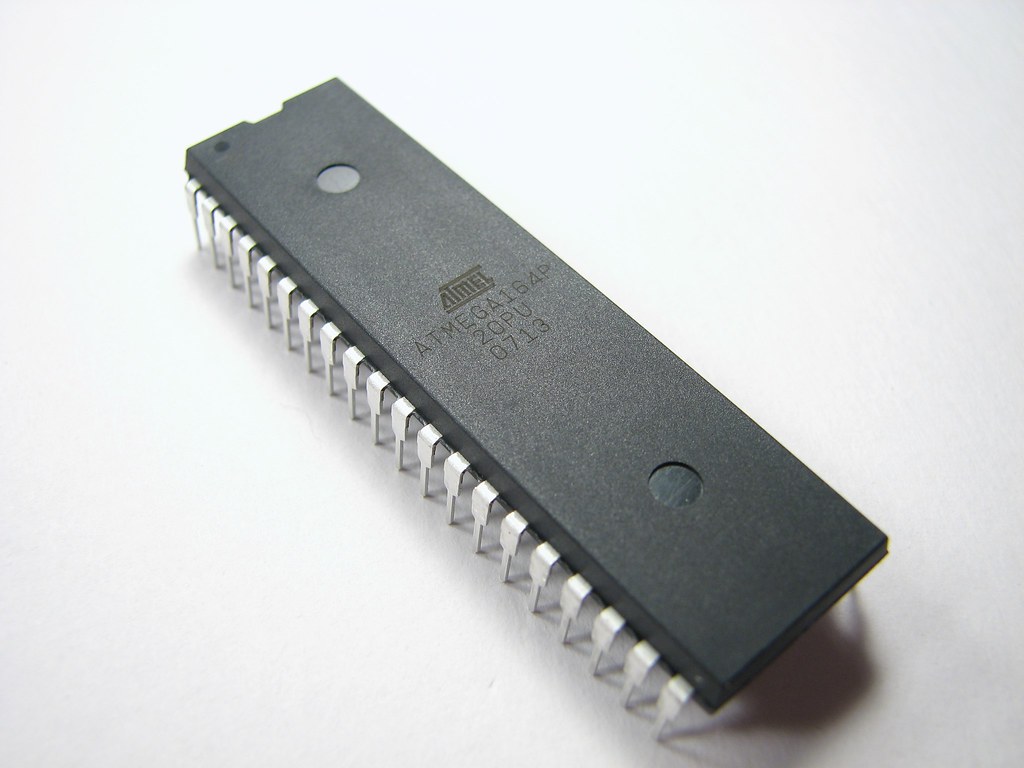
A "fantasy console" is a software environment that imitates a retro game machine that never existed, and PICO-8 is the best-known one: fixed palette, fixed resolution, tight code limits. On September 28, 2026, Hackaday covered a handheld build that runs PICO-8 games on real physical hardware, pairing a commodity microcontroller board with a small LCD and off-the-shelf buttons. Nothing in the BOM is exotic. That's exactly why it matters to people who buy components for a living.
Projects like this are a clean stress test of the low-volume supply chain. No franchise agreements, no allocation, no direct FAE support. The builder buys the same way a startup doing a first NPI run buys: through distributors, marketplaces, and whatever stock is actually on the shelf.
The PICO-8 handheld is a sourcing story, not just a maker story
Read the build log closely and the pattern is familiar to anyone who's quoted a 500-piece pilot run. The design leans on a dev-board-style MCU module, a generic SPI display, through-hole or SMD tact switches, a lithium cell with a charger IC, and a handful of passives. Every one of those line items has a counterfeit or substitution risk attached when you leave franchised channels.
Small SPI displays are a good example. The panels hobbyists buy for a few dollars are often factory seconds or reclaimed stock with no datasheet revision history. At one-off quantity nobody cares. At 2,000 units for a Kickstarter or a pilot production batch, a 5% dead-pixel fallout rate quietly eats your margin. Same story with the charger ICs: TP4056 clones are everywhere, and the marking on the chip tells you very little about what's inside the epoxy.
ESP32-S3 keeps absorbing jobs that used to need bigger silicon
A second Hackaday item from the same week underlines where the commodity MCU ceiling now sits: a Jet Megatextures demo running on an ESP32-S3, using mipmapping to push textured 3D scenes on a chip that costs a few dollars in volume. The ESP32-S3 is a dual-core Xtensa LX7 part at 240 MHz with 512 KB of SRAM and native USB. A few years ago this class of rendering meant an applications processor plus DRAM. Now it's a $3 MCU with some octal PSRAM.
For buyers, the practical consequence is demand concentration. When a chip this cheap can do this much, everyone designs it in, and Espressif's modules and bare dies periodically tighten. If your BOM specifies an ESP32-S3-WROOM-1-N8R8 (8 MB flash, 8 MB PSRAM), keep the N16R8 variant and the bare ESP32-S3R8 qualified as alternates before you need them. Qualifying a second source during a shortage is how you end up paying broker pricing.
How the commodity parts stack up
Here's the realistic comparison table for the MCU class that dominates these builds, plus one industrial-grade contrast:
| Part | Core / Clock | SRAM / Flash | Package | Temp Range | Typical Use |
|---|---|---|---|---|---|
| ESP32-S3R8 | Dual Xtensa LX7 @ 240 MHz | 512 KB + 8 MB PSRAM in-package | QFN-56 | -40 to +85 °C | Display, USB, Wi-Fi/BLE builds |
| RP2040 | Dual Cortex-M0+ @ 133 MHz | 264 KB SRAM, external QSPI flash | QFN-56 | -20 to +85 °C | Emulation, PIO-heavy I/O |
| STM32F405RG | Cortex-M4F @ 168 MHz | 192 KB SRAM, 1 MB flash | LQFP-64 | -40 to +85 °C | Legacy designs, mature toolchain |
| NSING N32G452 | Cortex-M4F @ 144 MHz | 144 KB SRAM, 512 KB flash | LQFP-64/100 | -40 to +105 °C | Industrial control, security-focused |
That last row deserves a note. While hobbyist silicon grabs the headlines, vendors like NSING Technologies are pushing full-stack MCU lines at industrial automation and digital energy, as EE Times recently reported — the N32 series spans 144 to 600 MHz Cortex-M4F/M7 parts with integrated security blocks. If your product starts life as an ESP32 prototype but will end up in a cabinet on a factory floor, the migration path to an extended-temperature, security-rich MCU should be on the BOM review agenda early, not after the certification house asks for it.
What these builds teach about real sourcing risk
Three pitfalls show up repeatedly when open-hardware-style BOMs move toward production:
- Module vs. bare chip confusion. Dev designs use modules (pre-certified, flash included). Production quotes sometimes come back for the bare die because it's cheaper on paper. RF recertification and in-house flash sourcing erase that saving fast.
- External QSPI flash as the weak link. The RP2040 and many similar parts boot from external NOR flash. When Winbond or GigaDevice W25Q-series parts tightened in past cycles, whole product lines stalled over a $0.30 component. Dual-footprint your board for at least two flash vendors.
- Display panels with no second source. Small TFTs are often single-vendor, single-fab parts with six-month lives. If the panel goes EOL, you're redesigning the enclosure, not just the PCB.
There's also a lifecycle lesson hiding in another Hackaday piece from the same week, a photo tour of Landschaftspark Duisburg-Nord, a decommissioned German steelworks turned public park. Industrial equipment routinely outlives the companies and supply chains that built it. Electronics buyers face the same math in miniature: the MCU you pick today may need to be buyable, or last-time-buyable, a decade from now. Commodity parts with huge install bases (ESP32, RP2040, STM32) tend to stay available or at least stay findable on the open market precisely because millions of units are in circulation. Obscure parts don't get that safety net.
A pragmatic buying posture for small-batch builds
If you're buying at 100 to 5,000 pieces for a build like this, the rules are simple but easy to skip. Buy MCUs and flash from franchised channels or a distributor that can show lot traceability; the savings from gray-market MCU reels rarely survive one batch of re-marked parts. Check date codes on flash memory aggressively — old-stock NOR flash with degraded data retention is a real failure mode, not a theoretical one. And get quotes on the display early, because it's the component most likely to dictate your enclosure revision.
At XingHuan International (icxing.com), a large share of the small-batch inquiries we handle look exactly like these BOMs: an MCU module, SPI flash, a power-management IC, connectors, and a screen. The builds that go smoothly are the ones where alternates were qualified before the first purchase order, not after the first shortage email.
The PICO-8 handheld is charming on its own terms. But for anyone sourcing components, it's also a free preview of what your pilot run's BOM risk looks like, laid out in public with photos.
FAQ
Q: Is it safe to buy ESP32-S3 modules from open-market sellers for a production run?
A: For prototypes, fine. For production, insist on sealed reels with traceable lot codes — cloned or re-balled modules do circulate, and the failure rate shows up in RF performance first. If open market is your only option, X-ray and decap a sample per lot before committing.
Q: Why does external QSPI flash matter so much on parts like the RP2040?
A: The RP2040 has no onboard flash, so a $0.30 W25Q-series NOR chip becomes a single point of failure for the whole design. When that flash family tightens, the entire product stops. Dual-footprinting the PCB for two vendors (e.g., Winbond and GigaDevice) costs nothing at layout time and saves you during allocation.
Q: How long can I realistically expect a commodity MCU like the ESP32-S3 or RP2040 to stay available?
A: Neither vendor publishes a formal 15-year lifecycle guarantee like industrial MCU lines do, but install base matters: the RP2040 has shipped tens of millions of units since 2021, which keeps both original stock and market liquidity healthy. For regulated or industrial products, plan a last-time-buy buffer of 18–24 months of consumption regardless of vendor promises.