
How to Source Electronic Components from China for NPI Builds
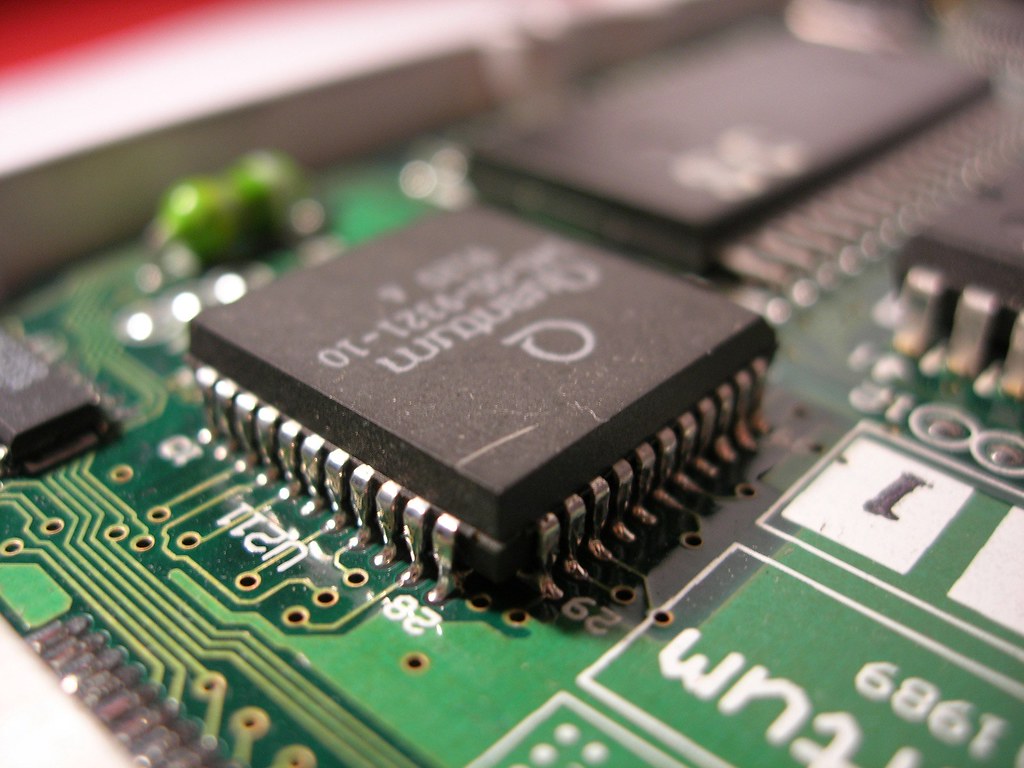
If you are asking how to source electronic components from China for an NPI build, the honest answer is: do not start with price. Start with the BOM risk map. A pilot run of 50 to 500 boards fails because one 12-cent part is missing, one date code is mixed, or one “new” reel arrives with solder-dipped leads. The China supply chain is still the fastest place to recover from those problems, but only if you treat speed and control as separate jobs.
The market is uneven in 2026. Some commodity passives are easy, while power parts, sensors and qualified parts for harsh environments need more care. EE Times recently looked at sourcing COTS capacitors for New Space, and the buying lesson carries over to industrial NPI: “commercial” no longer means casual. If a satellite team is screening capacitors harder, your motor controller or outdoor gateway should not buy anonymous MLCCs from a chat window.
Start with a BOM risk score, not a spreadsheet of quotes
Split every line into four buckets before you send RFQs. A: sole-sourced or allocation-prone parts. B: parts with known clones or refurb risk. C: passives and discretes with multiple qualified sources. D: mechanicals, cables and low-risk jellybeans. This sounds basic, but it changes where you spend effort.
For bucket A, demand lot traceability before you negotiate. For bucket B, ask for photos of reel labels, inner bags and top marks under oblique light. For bucket C, approve alternates early, especially package equivalents like 0402 versus 0603 where layout allows. Bucket D can go to the lowest sane quote, but only after the other three buckets are stable.
A realistic scenario: your BOM has a 60 V dual MOSFET for a compact power stage, a 0.33 W anti-surge resistor in 0402, and a batch of X7R capacitors. Power Electronics News covered Taiwan Semiconductor’s 60 V dual MOSFET additions, while EDN noted Rohm’s SDR01 anti-surge 0402 parts. The useful point is not the brand name. It is that high-density power and small surge parts are moving fast, so package, RDS(on), rated power and wettable-flank needs must be locked before a broker offers “same spec” leftovers.
Choose the China channel by risk, not habit
There are four practical routes. Authorized or franchised distribution gives the cleanest paper trail but may have MOQ and lead-time friction. Large independent distributors can kit mixed BOMs fast. Shenzhen market brokers are useful for shortages and obsolete stock, but they need tighter inspection. Factory-direct or agent channels fit stable volume, not a two-week prototype panic.
| Channel | Typical MOQ | Lead time seen | Traceability to ask for | Best fit | Example part checks |
|---|---|---|---|---|---|
| Authorized/franchised | Full reel or 1k+ | 2-10 weeks, sometimes NCNR | CofC, packing list, lot/date code, MSL label | Power ICs, MCUs, automotive parts | 60 V MOSFET RDS(on), Vgs rating, Qg, wettable flank, -55 to 150 C |
| Large independent distributor | Cut tape to full reel | 1-5 days in stock | ERP lot history, refund terms, test report on request | NPI kitting and shortage fills | 0402 resistor 0.33 W surge rating, tolerance 1%, TCR, AEC-Q200 if needed |
| Shenzhen broker/spot market | Any qty, price moves fast | Same day to 72 h | Photos before payment, X-ray/decap plan, return window | Hard-to-find and EOL gaps | Top mark font, lead plating, blacktopping, MSL 3 bake record |
| Factory/agent direct | Often 5k-50k | 4-16 weeks | Contract manufacturer code, PCN/EOL notices | Production ramp after EVT | MLCC DC bias derating, X7R vs X5R, 50 V 0805 capacitance at bias |
Use the table as a filter. If a seller cannot answer the right column for your part class, the low quote is not low. It is deferred cost.
Documents that separate real stock from dressed stock
Ask for three items before money moves: a clear photo of the exact reel label, a packing list that matches your PO line, and a statement of source. For controlled parts, add certificate of conformance, country of origin, date code range and MSL handling. For China domestic brands, ask for the factory authorization letter or distributor agreement if the seller claims that status.
- Reject stock if the reel label shows a different moisture sensitivity level than the part datasheet.
- Treat mixed date codes as a yellow flag, not an automatic fail, unless your customer requires one lot.
- For refurbished risk, look for re-tinned leads, sanding marks, ink that smears with IPA, and laser marks that sit too shallow.
- For passives, check capacitance under bias where it matters; a 10 uF 25 V MLCC can collapse hard at 12 V.
Third-party test is worth it when the part can stop the build. A basic screening package for suspect ICs often includes external visual, X-ray for die and wire bond presence, solderability, and a small electrical sample. Full decapsulation is not for every PO, but for grey-market FPGA, MCU or power modules it can be cheaper than a line-down week.
Commercial terms buyers forget until it hurts
Incoterms decide who owns the problem when the carton is short. EXW Shenzhen can be fine if your forwarder is strong; DDP is easier for finance but hides broker margin. Payment terms tell you a lot: a supplier who accepts inspection before final balance is easier to work with than one who wants 100% before photos.
Put substitution rules in the PO. Write “no manufacturer change without written approval” for ICs, “no date code older than 24 months unless approved” for production stock, and “no mixed reels unless listed line by line.” Keep a golden sample from the first accepted lot. When the second batch arrives different, that sample turns an argument into a comparison.
For NPI teams, XingHuan International (icxing.com) is most useful as a controlled second source: kitting common lines fast, flagging risky date codes, and holding documentation with the lot instead of sending a bare tracking number. That is the part that saves a pilot build.
A short workflow that works under deadline
Day one, freeze the risky 20% of the BOM and approve alternates in writing. Day two, RFQ those lines to two channel types, not five similar brokers. Day three, order samples or inspection for any line with refurb history. Day four, book freight only after labels match. Day five, receiving checks quantity, labels, MSL and top marks before parts touch production stock.
Keep the feedback loop blunt. If a supplier sends a wrong suffix once, note it. If they explain it clearly and replace fast, maybe keep them for low-risk lines. If they argue that “engineers can modify firmware” for a different silicon revision, move them to the no-quote list.
FAQ
Q: What is the first document to request when buying ICs from a China independent distributor?
A: Ask for reel-label and top-mark photos tied to the exact PO line, plus a source statement and date code range. For MSL 3 parts, request bake and dry-pack history if the seal was opened; one missing humidity card can force a bake cycle and delay SMT.
Q: How do I handle mixed date codes on a prototype buy?
A: Accept them only for non-safety lines and record each lot against the board serial range. For power MOSFETs, regulators and memory, keep one lot per build where possible because a parametric shift can look like a firmware bug during EVT.
Q: Is Shenzhen spot stock always counterfeit?
A: No, but it is unmanaged until proven otherwise. Use it for genuine shortage or EOL gaps, then apply visual, X-ray and solderability checks on the lines that can stop the build; commodity 1% resistors rarely need the same spend as a $40 MCU.
The workable rule is simple: buy the BOM, not the cheapest line. When the risky parts are documented and the dull parts arrive together, NPI stops feeling like gambling.