
NSING N32 MCUs: What Full-Stack Chips Mean for Buyers
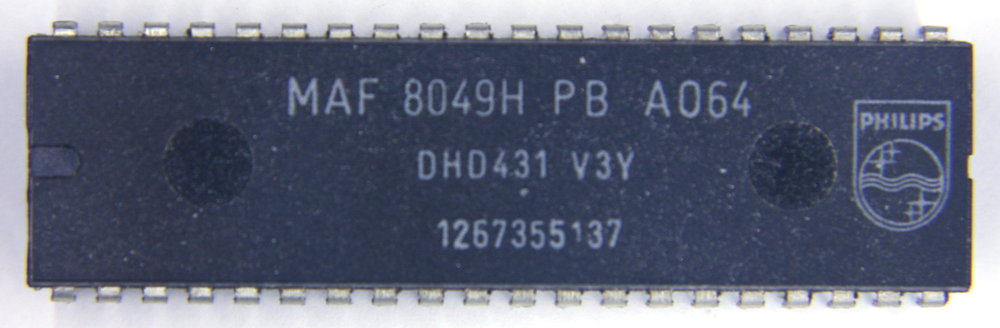
A full-stack semiconductor solution combines the MCU or SoC silicon, security hardware, firmware stacks, and application reference designs into a single vendor platform rather than discrete parts from multiple suppliers. NSING Technologies, a Singapore-founded chipmaker, is pushing exactly that model into industrial automation, AI data centers, and digital energy, with its N32-series MCUs running Cortex-M4F/M7 cores at 144 to 600 MHz and integrating EtherCAT, CAN-FD, USB-HS, and high-precision ADCs on-chip. As EE Times reported, these parts are aimed at servo drives, inverters, and energy systems where the control loop and the communications stack need to live in one device.
That's the headline. Here's what it actually means if you're the one placing the purchase orders.
Why Full-Stack Semiconductor Solutions for Smart, Secure Industry and Digital Energy Matter to Buyers
The traditional sourcing pattern for a servo drive or a solar inverter looks like this: an MCU from one vendor, an EtherCAT slave controller or FPGA from another, a security IC or external flash for secure boot from a third, plus a CAN transceiver and isolation. That's four to six line items, each with its own lead time, MOQ, and allocation risk. When a vendor folds the protocol controllers, the security engine, and the precision analog into the MCU itself, several of those line items disappear.
The N32 series is a good example of the trend. EtherCAT and CAN-FD in hardware means you don't need a separate fieldbus controller for most drive applications. A 600 MHz Cortex-M7 at the top of the range covers the compute headroom for current-loop control and some edge inference. The integrated ADCs handle phase-current sensing without an external converter in many designs. Fewer parts, fewer suppliers, fewer things that can go on backorder at the worst moment.
The tradeoff is real, though. Consolidation raises the stakes on a single part number. If your drive design depends on one full-stack MCU and that part goes to 26-week lead times, there's no drop-in substitute. You can't just swap an EtherCAT-capable secure MCU the way you'd swap a generic op-amp.
The Security Angle Is Not Marketing Fluff This Time
Industrial buyers used to treat on-chip security as a checkbox. That's changing fast. The UK's new Semiconductor Catapult is explicitly pivoting toward AI and RF, and government-level attention to chip security is rising on both sides of the Atlantic, as Electronics Weekly covered from Microelectronics UK 2026. The opening keynote at the same event had the UK's Chief Scientific Adviser stating that semiconductors are now a national priority, per Electronics Weekly's report. When governments fund chip capability with security language attached, procurement requirements for secure boot, hardware root of trust, and firmware signing follow within a couple of design cycles.
So when a vendor like NSING builds the security block into the MCU rather than leaving it to an external TPM or secure element, that maps directly to where compliance is heading. For a buyer, it means one less component to qualify for IEC 62443 or similar frameworks, and one less certificate chain to chase.
What Integration Actually Does to Your BOM
Concrete numbers help here. A typical mid-range motor-control BOM built around a discrete architecture versus a full-stack MCU approach:
| Function Block | Discrete Approach | Full-Stack MCU Approach |
|---|---|---|
| Control core | Cortex-M7 MCU, e.g. 480 MHz, LQFP-144 | N32-class MCU, up to 600 MHz, single device |
| Fieldbus | EtherCAT slave controller ASIC + 2 PHYs, ~$4-8 | Integrated EtherCAT MAC, external PHYs only |
| Industrial CAN | External CAN-FD controller (SPI) or MCU without FD | On-chip CAN-FD, transceiver only |
| Secure boot / crypto | Secure element, I2C, ~$0.80-1.50 | On-chip security engine |
| Current/voltage sensing | External 16-bit ADC, SPI, ~$2-4 | Integrated high-precision ADC |
| Line items to source | 5-6 active ICs | 1-2 active ICs |
The cost delta on silicon alone might be a wash or even favor the discrete route at very high volumes. The savings show up in purchasing overhead, qualification effort, PCB area, and the simple fact that one allocation event can no longer stall your whole build. Ask anyone who tried to source EtherCAT controllers in 2022 how that went.
Digital Energy Is Pulling the Same Direction
The digital-energy side of the NSING announcement lines up with what we're seeing elsewhere. Energy measurement is moving into cheap end devices: EDN's teardown of TP-Link's Tapo P115 smart plug shows a consumer product that dropped a protocol and added energy tracking instead, because per-outlet metering is what sells now. Scale that instinct up to string inverters, battery storage, and EV charging, and you get demand for MCUs with accurate analog front ends, fast control loops, and enough comms to report upstream.
Buildings are part of the same pull. As EE Times noted in its Wi-Fi HaLow piece, edge AI in smart buildings needs connectivity that balances bandwidth, range, and power. The control silicon feeding those networks has to match: low-power states, real-time response, and secure update paths. Full-stack MCUs are one answer to that requirement set.
Sourcing Implications: What to Check Before You Commit
If a full-stack industrial MCU is on your radar, a few practical checks from the sourcing side:
- Second-source reality. There is no pin-compatible second source for an integrated EtherCAT-plus-security MCU. Plan for it: qualify the part early, negotiate buffer stock or a bonded-inventory agreement, and design your firmware abstraction layer so a painful migration is at least possible.
- Lot traceability. Newer vendors expanding fast sometimes ship through multiple assembly and test sites. Ask for lot-level traceability and country-of-origin per lot, not just per part number. This matters for industrial customers with audit requirements.
- Lifecycle commitments. Industrial designs live 10-15 years. Get the longevity commitment in writing, including the last-time-buy terms, before the part goes into a shipping product.
- Counterfeit exposure. The good news: newer, less-commoditized parts are lower-value targets for counterfeiters than aging TI or ADI analog. The bad news: once a part gets design wins in drives and inverters, grey-market pulls and refurbished parts follow. Buy through franchised channels or a distributor that will stand behind authenticity paperwork. XingHuan International (icxing.com) handles exactly this kind of mixed-signal industrial sourcing, including hard-to-find line items and lot-level documentation, which takes some weight off your incoming inspection team.
- Reference design lock-in. Full-stack vendors win designs through their firmware stacks. That's fine, but read the license terms. Some stacks are free for production; some carry royalties or restrictive terms that surface late.
One honest observation to end on: the full-stack pitch is compelling, and the BOM math usually works. But the engineers who get burned are the ones who treated a highly integrated MCU like a commodity line item. It isn't. Treat it like a single point of failure, price the risk accordingly, and the architecture earns its keep.
FAQ
Q: What does the NSING N32 series actually integrate?
A: Per the EE Times coverage, the N32 MCUs run Cortex-M4F or M7 cores at 144-600 MHz and integrate EtherCAT, CAN-FD, USB-HS, and high-precision ADCs, targeting servo drives, inverters, and digital-energy equipment. That level of integration can remove three to five separate ICs from a typical industrial control BOM.
Q: Is a full-stack MCU riskier to source than discrete parts?
A: Yes and no. You have fewer line items to manage, but no pin-compatible second source exists for highly integrated parts. Mitigate with early qualification, written lifecycle commitments, and buffer stock agreements rather than assuming you can swap vendors later.
Q: How do I avoid refurbished or grey-market industrial MCUs?
A: Buy franchised where possible, and where you must use independents, require lot-level traceability, date codes consistent with production windows, and authenticity paperwork. Newer parts are less counterfeited than legacy analog, but any MCU with design wins in drives and inverters attracts grey-market supply within a couple of years.